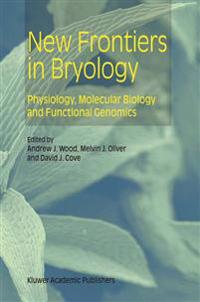
New Frontiers in Bryology
Nidottu, 2010
englanti
193,40 €
Lisää toivelistalle
The mosses (Bryophatea, Musci) are a diverse and widely distributed group of land plants. Mosses are attractive experimental plants because they exhibit the traditional attributes of good model systems (Le. ease of growth & maintenance, fast generation time, and amenable genetics) with the added advantage of a haploid gametophyte that allowed developmental mutants to be recovered with relative ease. In addition, mosses with the ability to tolerate extreme environmental conditions offer realistic models for the analysis of environmental stress-tolerance; particularly when compared to tracheophytes such as Arabidopsis thaliana in which these important plant phenotypes are either not clearly expressed or entirely lacking. And, in one of the most exciting developments in Plant Biology, efficient homologous recombination occurs in the moss Physcomitrella patens. The ability to perform efficient homologous recombination (Le. gene knock-outs) in P. patens is at present unique amongst all plants and represents an extremely powerful technique for the functional analysis of many plant genes. Over the past 5 years, a world-wide community of moss researchers has evolved. A highly successful "Moss" conference has been held annually (l998-Mumbai, India; 1999-Carbondale, IL, USA; 2000-Villars, Switzerland; 200l-0kazaki, Japan; 2002-Ambleside, UK; 2003-St. Louis, MO, USA) with "Moss 2004" planned to be held in Frieburg Germany. These conferences have been instrumental in the creation & development of strong collaborative ties, and the free exchange of both ideas and materials.
- Alaotsikko
- Physiology, Molecular Biology and Functional Genomics
- Toimittaja
- Wood Andrew J., Oliver Melvin J., Cove David J.
- ISBN
- 9789048165698
- Kieli
- englanti
- Paino
- 281 grammaa
- Julkaisupäivä
- 19.10.2010
- Kustantaja
- Springer
- Sivumäärä
- 203