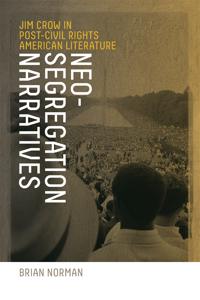
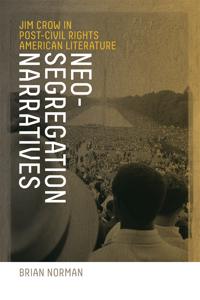
Neo-Segregation Narratives
Kirjailija:
E-kirja, 2010
englanti
48,50 €
Lisää toivelistalle
This study of what Brian Norman terms a neo-segregation narrative tradition examines literary depictions of life under Jim Crow that were written well after the civil rights movement.
From Toni Morrison''s first novel, The Bluest Eye, to bestselling black fiction of the 1980s to a string of recent work by black and nonblack authors and artists, Jim Crow haunts the post-civil rights imagination. Norman traces a neo-segregation narrative tradition-one that developed in tandem with neo-slave narratives-by which writers return to a moment of stark de jure segregation to address contemporary concerns about national identity and the persistence of racial divides. These writers upset dominant national narratives of achieved equality, portraying what are often more elusive racial divisions in what some would call a postracial present.
Norman examines works by black writers such as Lorraine Hansberry, Toni Morrison, Alice Walker, David Bradley, Wesley Brown, Suzan-Lori Parks, and Colson Whitehead, films by Spike Lee, and other cultural works that engage in debates about gender, Black Power, blackface minstrelsy, literary history, and whiteness and ethnicity. Norman also shows that multiethnic writers such as Sherman Alexie and Tom Spanbauer use Jim Crow as a reference point, extending the tradition of William Faulkner''s representations of the segregated South and John Howard Griffin''s notorious account of crossing the color line from white to black in his 1961 work Black Like Me.
From Toni Morrison''s first novel, The Bluest Eye, to bestselling black fiction of the 1980s to a string of recent work by black and nonblack authors and artists, Jim Crow haunts the post-civil rights imagination. Norman traces a neo-segregation narrative tradition-one that developed in tandem with neo-slave narratives-by which writers return to a moment of stark de jure segregation to address contemporary concerns about national identity and the persistence of racial divides. These writers upset dominant national narratives of achieved equality, portraying what are often more elusive racial divisions in what some would call a postracial present.
Norman examines works by black writers such as Lorraine Hansberry, Toni Morrison, Alice Walker, David Bradley, Wesley Brown, Suzan-Lori Parks, and Colson Whitehead, films by Spike Lee, and other cultural works that engage in debates about gender, Black Power, blackface minstrelsy, literary history, and whiteness and ethnicity. Norman also shows that multiethnic writers such as Sherman Alexie and Tom Spanbauer use Jim Crow as a reference point, extending the tradition of William Faulkner''s representations of the segregated South and John Howard Griffin''s notorious account of crossing the color line from white to black in his 1961 work Black Like Me.
- Kirjailija
- Brian Norman
- ISBN
- 9780820337357
- Kieli
- englanti
- Julkaisupäivä
- 1.11.2010
- Kustantaja
- University of Georgia Press