Tallenna
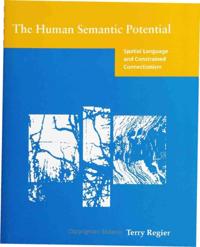
Human Semantic Potential
Lue Adobe DRM-yhteensopivassa e-kirjojen lukuohjelmassaTämä e-kirja on kopiosuojattu Adobe DRM:llä, mikä vaikuttaa siihen, millä alustalla voit lukea kirjaa. Lue lisää
Drawing on ideas from cognitive linguistics, connectionism, and perception, The Human Semantic Potential describes a connectionist model that learns perceptually grounded semantics for natural language in spatial terms. Languages differ in the ways in which they structure space, and Regier's aim is to have the model perform its learning task for terms from any natural language. The system has so far succeeded in learning spatial terms from English, German, Russian, Japanese, and Mixtec.The model views simple movies of two-dimensional objects moving relative to one another and learns to classify them linguistically in accordance with the spatial system of some natural language. The overall goal is to determine which sorts of spatial configurations and events are learnable as the semantics for spatial terms and which are not. Ultimately, the model and its theoretical underpinnings are a step in the direction of articulating biologically based constraints on the nature of human semantic systems.Along the way Regier takes up such substantial issues as the attraction and the liabilities of PDP and structured connectionist modeling, the problem of learning without direct negative evidence, and the area of linguistic universals, which is addressed in the model itself. Trained on spatial terms from different languages, the model permits observations about the possible bases of linguistic universals and interlanguage variation.
- Alaotsikko
- Spatial Language and Constrained Connectionism
- Kirjailija
- Terry Regier
- ISBN
- 9780262282239
- Kieli
- englanti
- Julkaisupäivä
- 29.8.1996
- Kustantaja
- THE MIT PRESS
- Formaatti
- PDF - Adobe DRM
- Lue e-kirjoja täällä
- Lue e-kirja mobiililaitteella/tabletilla
- Lukulaite
- Tietokone







