Tallenna
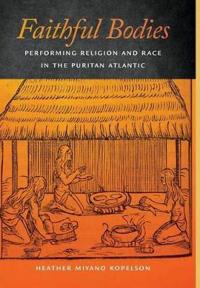
Faithful Bodies
In the seventeenth-century English Atlantic, religious beliefs and practices played a central role in creating racial identity. English Protestantism provided a vocabulary and structure to describe and maintain boundaries between insider and outsider. In this path-breaking study, Heather Miyano
Kopelson peels back the layers of conflicting definitions of bodies and competing practices of faith in the puritan Atlantic, demonstrating how the categories of "white," "black," and "Indian" developed alongside religious boundaries between "Christian" and "heathen" and between "Catholic" and "Protestant."
Faithful Bodies focuses on three communities of Protestant dissent in the Atlantic World: Bermuda,
Massachusetts, and Rhode Island. In this "puritan Atlantic," religion determined insider and outsider status: at times Africans and Natives could belong as long as they embraced the Protestant faith, while Irish Catholics and English Quakers remained suspect. Colonists' interactions with indigenous peoples of the Americas and with West Central Africans shaped their understandings of human difference and its acceptable boundaries. Prayer, religious instruction, sexual behavior, and other public and private acts became markers of whether or not blacks and Indians were sinning Christians or godless heathens. As slavery became law, transgressing people of color counted less and less as sinners in English puritans' eyes, even as some of them made Christianity an integral part of their communities. As Kopelson shows, this transformation proceeded unevenly but inexorably during the long seventeenth century.
- Alaotsikko
- Performing Religion and Race in the Puritan Atlantic
- Kirjailija
- Heather Miyano Kopelson
- ISBN
- 9781479860289
- Kieli
- englanti
- Paino
- 188 grammaa
- Julkaisupäivä
- 5.4.2016
- Kustantaja
- New York University Press
- Sivumäärä
- 416