Tallenna
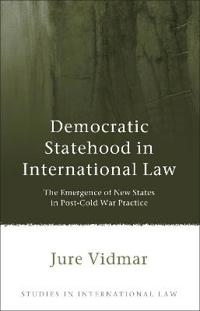
Democratic Statehood in International Law
This book analyses the emerging practice in the post-Cold War era of the creation of a democratic political system along with the creation of new states. The existing literature either tends to conflate self-determination and democracy or dismisses the legal relevance of the emerging practice on the basis that democracy is not a statehood criterion. Such arguments are simplistic. The statehood criteria in contemporary international law are largely irrelevant and do not automatically or self-evidently determine whether or not an entity has emerged as a new state. The question to be asked, therefore, is not whether democracy has become a statehood criterion. The emergence of new states is rather a law-governed political process in which certain requirements regarding the type of a government may be imposed internationally. And in this process the introduction of a democratic political system is equally as relevant or irrelevant as the statehood criteria. The book demonstrates that via the right of self-determination the law of statehood requires state creation to be a democratic process, but that this requirement should not be interpreted too broadly. The democratic process in this context governs independence referenda and does not interfere with the choice of a political system.
This book has been awarded Joint Second Prize for the 2014 Society of Legal Scholars Peter Birks Prize for Outstanding Legal Scholarship.
- Alaotsikko
- The Emergence of New States in Post-Cold War Practice
- Kirjailija
- Jure Vidmar
- ISBN
- 9781849464697
- Kieli
- englanti
- Paino
- 585 grammaa
- Julkaisupäivä
- 28.3.2013
- Kustantaja
- Hart Publishing
- Sivumäärä
- 302