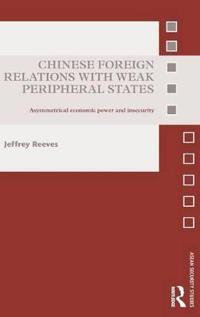
Chinese Foreign Relations with Weak Peripheral States
84,00 €
Lisää toivelistalle
This book examines China’s relations with its weak peripheral states through the theoretical lens of structural power and structural violence.
China’s foreign policy concepts toward its weak neighbouring states, such as the ‘One Belt, One Road’ strategy, are premised on the assumption that economic exchange and a commitment to common development are the most effective means of ensuring stability on its borders. This book, however, argues that China’s overreliance on economic exchange as the basis for its bilateral relations contains inherently self-defeating qualities that have contributed and can further contribute to instability and insecurity within China’s periphery. Unequal economic exchange between China and its weak neighbours results in Chinese influence over the state’s domestic institutions, what this book refers to as ‘structural power’. Chinese structural power, in turn, can undermine the state’s development, contribute to social unrest, and exacerbate existing state/society tensions—what this book refers to as ‘structural violence’. For China, such outcomes lead to instability within its peripheral environment and raise its vulnerability to security threats stemming from nationalism, separatism, terrorism, transnational organised crime, and drug trafficking, among others. This book explores the causality between China’s economically-reliant foreign policy and insecurity in its weak peripheral states and considers the implications for China’s security environment and foreign policy.
This book will be of much interest to students of Chinese politics, Asian security studies, international political economy and IR in general.
- Alaotsikko
- Asymmetrical Economic Power and Insecurity
- Kirjailija
- Reeves Jeffrey
- ISBN
- 9781138310483
- Kieli
- englanti
- Paino
- 400 grammaa
- Julkaisupäivä
- 30.6.2017
- Kustantaja
- Taylor & Francis
- Sivumäärä
- 258