Tallenna
Chicago's Industrial Decline
Lue Adobe DRM-yhteensopivassa e-kirjojen lukuohjelmassaTämä e-kirja on kopiosuojattu Adobe DRM:llä, mikä vaikuttaa siihen, millä alustalla voit lukea kirjaa. Lue lisää
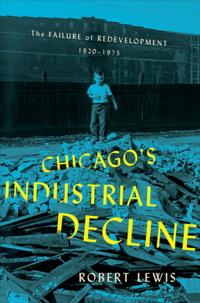
In Chicago's Industrial Decline Robert Lewis charts the city's decline since the 1920s and describes the early development of Chicago's famed (and reviled) growth machine. Beginning in the 1940s and led by local politicians, downtown business interest, financial institutions, and real estate groups, place-dependent organizations in Chicago implemented several industrial renewal initiatives with the dual purpose of stopping factory closings and attracting new firms in order to turn blighted property into modern industrial sites. At the same time, a more powerful coalition sought to adapt the urban fabric to appeal to middle-class consumption and residential living. As Lewis shows, the two aims were never well integrated, and the result was on-going disinvestment and the inexorable decline of Chicago's industrial space.By the 1950s, Lewis argues, it was evident that the early incarnation of the growth machine had failed to maintain Chicago's economic center in industry. Although larger economic and social forces-specifically, competition for business and for residential development from the suburbs in the Chicagoland region and across the whole United States-played a role in the city's industrial decline, Lewis stresses the deep incoherence of post-WWII economic policy and urban planning that hoped to square the circle by supporting both heavy industry and middle- to upper-class amenities in downtown Chicago.
- Alaotsikko
- The Failure of Redevelopment, 1920-1975
- Kirjailija
- Robert Lewis
- ISBN
- 9781501752643
- Kieli
- englanti
- Julkaisupäivä
- 15.12.2020
- Kustantaja
- CORNELL UNIVERSITY PRESS
- Formaatti
- PDF - Adobe DRM
- Lue e-kirjoja täällä
- Lue e-kirja mobiililaitteella/tabletilla
- Lukulaite
- Tietokone







