Tallenna
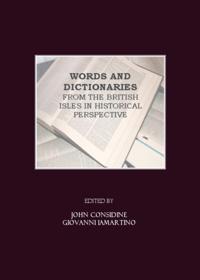
Words and Dictionaries from the British Isles in Historical Perspective
e-kirja, 2009
englanti
Lue Adobe DRM-yhteensopivassa e-kirjojen lukuohjelmassaTämä e-kirja on kopiosuojattu Adobe DRM:llä, mikä vaikuttaa siihen, millä alustalla voit lukea kirjaa. Lue lisää
Words and dictionaries from the British Isles in historical perspective brings together a wide range of current work on English-language lexicography and lexicology by a team of twelve contributors working in England, continental Europe, and North America.Fredric Dolezal's opening essay offers a provocative discussion of how the history of English lexicography has been, and might in the future be, written. The next four papers deal with the medieval and early modern periods: Carter Hailey investigates the dictionary evidence for individual lexical creativity in a discussion of Chaucer and the Middle English Dictionary; Gabriele Stein shows how early modern English dictionaries handled lexicological questions rather than simply listing words and equivalents; R. W. McConchie analyzes the biographical record of the lexicographer Richard Howlet, and Paola Tornaghi presents and discusses an unpublished source for the seventeenth-century lexicography of Old English. Three papers on the long eighteenth century follow: Noel Osselton's is an analysis of the "e;alphabet fatigue"e; which led many early lexicographers to treat words at the end of the alphabetical sequence more tersely than words at the beginning; Elisabetta Lonati's shows the engagement of John Harris's Lexicon technicum with one of the sources of its medical vocabulary; Charlotte Brewer's discusses the under-representation of eighteenth-century material in the Oxford English Dictionary. In the last three papers, Julie Coleman provides a groundbreaking analysis of Farmer and Henley's Slang and its analogues; Peter Gilliver draws on the Oxford English Dictionary archives to tell the story of an important editorial crisis; and Laura Pinnavaia discusses the syntactic flexibility of a set of idioms in a corpus of nineteenth- and twentieth-century prose. The volume as a whole offers new discoveries and important analytical and conceptual work, and is an essential text in the developing field of the history of lexicography.
- Toimittaja
- John Considine, Giovanni Iamartino
- ISBN
- 9781443807210
- Kieli
- englanti
- Julkaisupäivä
- 26.3.2009
- Kustantaja
- CAMBRIDGE SCHOLARS PUBLISHING
- Formaatti
- PDF - Adobe DRM
- Lue e-kirjoja täällä
- Lue e-kirja mobiililaitteella/tabletilla
- Lukulaite
- Tietokone