Tallenna
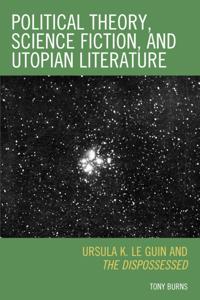
Political Theory, Science Fiction, and Utopian Literature
Lue Adobe DRM-yhteensopivassa e-kirjojen lukuohjelmassaTämä e-kirja on kopiosuojattu Adobe DRM:llä, mikä vaikuttaa siihen, millä alustalla voit lukea kirjaa. Lue lisää
Ursula K. Le Guin's The Dispossessed is of interest to political theorists partly because of its association with anarchism and partly because it is thought to represent a turning point in the history of utopian/dystopian political thought and literature and of science fiction. Published in 1974, it marked a revival of utopianism after decades of dystopian writing. According to this widely accepted view The Dispossessed represents a new kind of literary utopia, which Tom Moylan calls a "e;critical utopia."e; The present work challenges this reading of The Dispossessed and its place in the histories of utopian/dystopian literature and science fiction. It explores the difference between traditional literary utopia and novels and suggests that The Dispossessed is not a literary utopia but a novel about utopianism in politics. Le Guin's concerns have more to do with those of the novelists of the 19th century writing in the tradition of European Realism than they do with the science fiction or utopian literature. It also claims that her theory of the novel has an affinity with the ancient Greek tragedy. This implies that there is a conservatism in Le Guin's work as a creative writer, or as a novelist, which fits uneasily with her personal commitment to anarchism.
- Alaotsikko
- Ursula K. Le Guin and The Dispossessed
- Kirjailija
- Tony Burns
- ISBN
- 9780739144879
- Kieli
- englanti
- Julkaisupäivä
- 19.2.2010
- Kustantaja
- Bloomsbury Publishing (USA)
- Formaatti
- PDF - Adobe DRM
- Lue e-kirjoja täällä
- Lue e-kirja mobiililaitteella/tabletilla
- Lukulaite
- Tietokone







