Tallenna
Continuity of Pre-Islamic Motifs in Javanese Mosque Ornamentation, Indonesia
Lue Adobe DRM-yhteensopivassa e-kirjojen lukuohjelmassaTämä e-kirja on kopiosuojattu Adobe DRM:llä, mikä vaikuttaa siihen, millä alustalla voit lukea kirjaa. Lue lisää
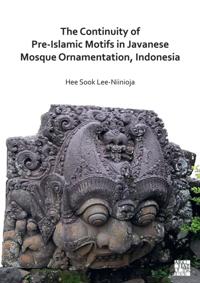
The Continuity of Pre-Islamic Motifs in Javanese Mosque Ornamentation assesses the continuity and significance of Hindu-Buddhist design motifs in Islamic mosques in Java. The research starts from a belief that typical Javanese ornaments were consistently used both in pre-Islamic Hindu-Buddhist temples and Islamic mosques in Indonesia. This phenomenon was a result of syncretic Javanese Islam, composed of mystic animism, Hindu-Buddhism, and Islam, which differed from orthodox Islam in the Near East and Arab world. The volume investigates four pre-Islamic motifs in Javanese mosque ornamentation from the 15th century to the present day: prehistoric tumpals, Hindu-Buddhist kala-makaras, lotus buds, and scrolls, all of which have symbolic connotations and are used to decorate sanctuaries. For a comparison between temple and mosque ornamentation, 10 Hindu-Buddhist temples and 30 mosques were selected, and a representative sample of each motif was taken during the researcher's fieldwork. The findings revealed continuity in the four motifs across the pre-Islamic and Islamic periods, reflected in lines, shapes, forms, and rhythms. The symbolic connotations of the four motifs allowed them to continue, and their influence was dependent upon the creativity of the local genius in each epoch.
- Kirjailija
- Hee Sook Lee-Niinioja
- ISBN
- 9781803270494
- Kieli
- englanti
- Julkaisupäivä
- 10.2.2022
- Kustantaja
- Archaeopress Publishing Ltd
- Formaatti
- PDF - Adobe DRM
- Lue e-kirjoja täällä
- Lue e-kirja mobiililaitteella/tabletilla
- Lukulaite
- Tietokone