Tallenna
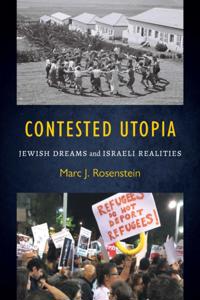
Contested Utopia
Lue Adobe DRM-yhteensopivassa e-kirjojen lukuohjelmassaTämä e-kirja on kopiosuojattu Adobe DRM:llä, mikä vaikuttaa siihen, millä alustalla voit lukea kirjaa. Lue lisää
This first book to examine the Jewish state through the lens of Jewish utopian thought, from its biblical beginnings to modernity, offers a fresh perspective on the political, religious, and geopolitical life of Israel. As Marc J. Rosenstein argues, the Jewish peoples collective memories, desires, hopes, and faith have converged to envision an ideal life in the Land of Israel-but, critically, the legacy is a kaleidoscope of conflicting (and sometimes overlapping) visions. And after three millennia of imagining utopia, it is almost impossible for Jews to respond to Israels realities without being influenced-even unconsciously-by these images. Charting the place of utopian thought in Judaism, Rosenstein then illustrates, with original texts, diverse utopian visions of the Jewish state: Torah state (Yavetz), holy community (based on nostalgic memories of the medieval community), national-cultural home (Lewinsky), normal state (Herzl), socialist paradise (Syrkin), anarchy (Jabotinsky), and a polity defined by Israels historic or divinely ordained borders. Analyzing how these disparate utopian visions collide in Israels attempts to chart policy and practice regarding the Sabbath, social welfare, immigration, developing versus conserving the land, and the Israel-Diaspora relationship yields novel perspectives on contemporary flashpoints. His own utopian vision offers a further entryway for both Israelis and Diaspora Jews into more informed and nuanced conversations about the Jewish state.
- Alaotsikko
- Jewish Dreams and Israeli Realities
- Kirjailija
- Marc J. Rosenstein
- ISBN
- 9780827618633
- Kieli
- englanti
- Julkaisupäivä
- 1.3.2021
- Kustantaja
- University of Nebraska Press
- Formaatti
- Epub - Adobe DRM
- Lue e-kirjoja täällä
- Lue e-kirja mobiililaitteella/tabletilla
- Lukulaite
- Tietokone







