Tallenna
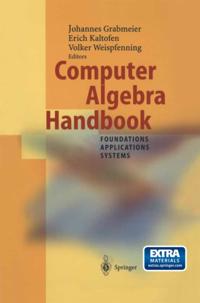
Computer Algebra Handbook
e-kirja, 2012
englanti
Lue Adobe DRM-yhteensopivassa e-kirjojen lukuohjelmassaTämä e-kirja on kopiosuojattu Adobe DRM:llä, mikä vaikuttaa siihen, millä alustalla voit lukea kirjaa. Lue lisää
Two ideas lie gleaming on the jeweler's velvet. The first is the calculus, the sec- ond, the algorithm. The calculus and the rich body of mathematical analysis to which it gave rise made modern science possible; but it has been the algorithm that has made possible the modern world. -David Berlinski, The Advent of the Algorithm First there was the concept of integers, then there were symbols for integers: I, II, III, 1111, fttt (what might be called a sticks and stones representation); I, II, III, IV, V (Roman numerals); 1, 2, 3, 4, 5 (Arabic numerals), etc. Then there were other concepts with symbols for them and algorithms (sometimes) for ma- nipulating the new symbols. Then came collections of mathematical knowledge (tables of mathematical computations, theorems of general results). Soon after algorithms came devices that provided assistancefor carryingout computations. Then mathematical knowledge was organized and structured into several related concepts (and symbols): logic, algebra, analysis, topology, algebraic geometry, number theory, combinatorics, etc. This organization and abstraction lead to new algorithms and new fields like universal algebra. But always our symbol systems reflected and influenced our thinking, our concepts, and our algorithms.
- Alaotsikko
- Foundations * Applications * Systems
- Kääntäjä
- M. Hitz
- Toimittaja
- Volker Weispfenning, Erich Kaltofen, Johannes Grabmeier
- ISBN
- 9783642558269
- Kieli
- englanti
- Julkaisupäivä
- 6.12.2012
- Kustantaja
- Springer Berlin Heidelberg
- Formaatti
- PDF - Adobe DRM
- Lue e-kirjoja täällä
- Lue e-kirja mobiililaitteella/tabletilla
- Lukulaite
- Tietokone