Spara
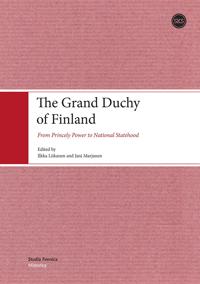
The Grand Duchy of Finland

Histories of Finland within the Swedish Kingdom and Russian Empire often treat the country's status as a grand duchy as a mere curiosity. This book challenges this trivialization by illuminating the grand duchy's crucial role in shaping how historical actors understood political structures. In the early modern period, it served as a stage for the display of princely power. After the Napoleonic Wars, the grand duchy emerged as a pivotal intermediary between imperial rule and ideas of national sovereignty. At the time of Finnish nation building and political mobilization, it became a context for rethinking national, ethnic and regional identity, as well as statehood and, ultimately, democracy.
Through a series of selected case studies, this volume examines how conceptualizations of Finland as a political entity evolved from the early modern period to the First World War, offering fresh insights into past ideas of Finland's autonomy, independence and statehood.
Through a series of selected case studies, this volume examines how conceptualizations of Finland as a political entity evolved from the early modern period to the First World War, offering fresh insights into past ideas of Finland's autonomy, independence and statehood.
- Undertitel
- From Princely Power to National Statehood
- Redaktör
- Ilkka Liikanen, Jani Marjanen
- ISBN
- 9789524270120
- Språk
- Engelska
- Vikt
- 640 gram
- Utgivningsdatum
- 2026-05-13
- Sidor
- 320







