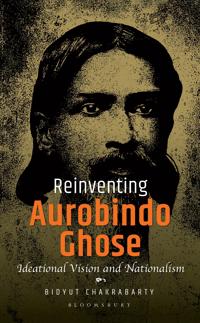
Reinventing Aurobindo Ghose
Författare:
E-bok, 2025
engelska
1 376 kr

Spara till önskelista
Aurobindo Ghose''s ideological vision challenges traditional interpretations that divide his thought into distinct political and spiritual phases. The common belief that his engagement in the nationalist movement (1893–1910) gave way to a retreat into spirituality in Pondicherry oversimplifies the complexity of his intellectual evolution. This division, often found in historiography, suggests a shift from nationalism to spirituality but fails to recognise the underlying continuity in Aurobindo''s ideas. A closer examination reveals a seamless development that transcends such a simplistic bifurcation.
Aurobindo''s nationalism was not solely political; it was deeply connected to his reverence for India''s ancient intellectual traditions. He opposed the Westernisation of India, seeing it as a force that disconnected Indians from their cultural heritage. The blind imitation of Western values, in his view, betrayed India''s spiritual and philosophical legacy. This commitment to intellectual revival was evident throughout his early career, during which he sought to navigate the colonial system, even attempting to secure a position within the British administration.
Ultimately, Aurobindo rejected this path and aligned himself with the nationalist movement. Alongside leaders like Lal, Bal, and Pal, he redefined Indian nationalism, advocating for direct resistance to colonial rule and championing mass mobilisation that included all castes, religions, and genders. His vision was not a transition from politics to spirituality, but an integrated approach, where nationalism and spirituality were inextricably linked in the pursuit of India''s freedom and cultural renaissance.
Aurobindo''s nationalism was not solely political; it was deeply connected to his reverence for India''s ancient intellectual traditions. He opposed the Westernisation of India, seeing it as a force that disconnected Indians from their cultural heritage. The blind imitation of Western values, in his view, betrayed India''s spiritual and philosophical legacy. This commitment to intellectual revival was evident throughout his early career, during which he sought to navigate the colonial system, even attempting to secure a position within the British administration.
Ultimately, Aurobindo rejected this path and aligned himself with the nationalist movement. Alongside leaders like Lal, Bal, and Pal, he redefined Indian nationalism, advocating for direct resistance to colonial rule and championing mass mobilisation that included all castes, religions, and genders. His vision was not a transition from politics to spirituality, but an integrated approach, where nationalism and spirituality were inextricably linked in the pursuit of India''s freedom and cultural renaissance.
- Författare
- Bidyut Chakrabarty
- ISBN
- 9789361314803
- Språk
- engelska
- Utgivningsdatum
- 2025-06-30
- Förlag
- Bloomsbury Publishing
- Sidor
- 272