Spara
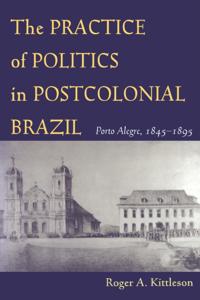
Practice of Politics in Postcolonial Brazil

Läs i Adobe DRM-kompatibel e-boksläsareDen här e-boken är kopieringsskyddad med Adobe DRM vilket påverkar var du kan läsa den. Läs mer
The Practice of Politics in Postcolonial Brazil traces the history of high and low politics in nineteenth-century Brazil from the vantage point of the provincial capital of Porto Alegre. In the immediate postcolonial period, new ideas about citizenship and freedom were developing, and elites struggled for control of the state as the lower classes sought inclusion in political life. In a shift from the Liberal Party to Positivist or Conservative rule during the bloody Federalist Revolt of 1893-1895, new leaders sought to bring about a more balanced structure of government where the capitalist was sympathetic to the worker, and the worker more passive toward the elite. This represented a complete change of opinions-a new regime of ideas. Termed a "e;scientific"e; approach by its proponents, the movement was based on historical process and would be brought about through civic education. Against the backdrop of the abolition of slavery and subsequent assimilation, the rise of European immigration, and industrialization, Kittleson investigates how "e;the people"e; shaped changing political ideologies and practices, and how through local struggles and changes in elite ideology, the lower classes in Porto Alegre won limited political inclusion that was denied elsewhere.
- Undertitel
- Porto Alegre, 1845-1895
- Författare
- Roger A. Kittleson
- ISBN
- 9780822972891
- Språk
- Engelska
- Utgivningsdatum
- 2005-12-30
- Tillgängliga elektroniska format
- PDF - Adobe DRM
- Läs e-boken här
- E-boksläsare i mobil/surfplatta
- Läsplatta
- Dator







