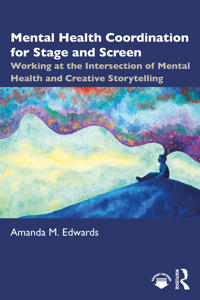
Mental Health Coordination for Stage and Screen
Författare:
Inbunden, 2026
engelska
2 017 kr

Spara till önskelista
Mental Health Coordination for Stage and Screen explores and defines the role of
the mental health coordinator in theatre, film, and television, offering traumainformed,
evidence-based frameworks that strengthen safety, connection, and
well-being throughout the creative process.
This book blends neuroscience, polyvagal theory, and trauma-informed
practice to unpack how safety, and the lack of it, shapes creative workspaces.
By illuminating the biology of connection, it helps readers understand why
certain industry norms have caused harm and how new, healing-forward
practices can transform the way stories are made. Featuring case studies,
protocols, assessment tools, coordination scripts, and restorative practices, it
offers practical, field-tested methods for integrating mental health support
into every phase of production. Readers gain clear guidance for navigating
high-intensity material, supporting performers and crew, addressing systemic
inequities, and building resilient, collaborative environments. These tools are
designed for immediate application, helping creative professionals not only
understand the theory behind the work but also begin doing the work of
mental health coordination.
Written for professionals and students across the entertainment industry,
including aspiring mental health coordinators, intimacy professionals,
directors, producers, stage managers, educators, dramaturgs, and counselors
entering creative settings, this book also supports classrooms teaching
theatre pedagogy, film production, arts leadership, social justice, and applied
performance. It is equally valuable for researchers and creative teams seeking
a structured, accessible, and ethically grounded approach to mental health and
safety in artistic environments.
Companion tools, including worksheets, reporting forms, safety protocols,
assessment templates, dramaturgical collaboration guides, concern navigation
charts, restorative practice resources, and a comprehensive portrayal toolkit,
are available as downloadable supplements to support direct implementation
in rehearsals, classrooms, and on-set workflows.
- Undertitel
- Working at the Intersection of Mental Health and Creative Storytelling
- Författare
- Amanda M. Edwards
- ISBN
- 9781041070184
- Språk
- engelska
- Vikt
- 518 gram
- Utgivningsdatum
- 2026-09-03
- Förlag
- Taylor & Francis
- Sidor
- 204