Spara
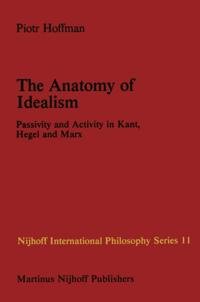
Anatomy of Idealism

Läs i Adobe DRM-kompatibel e-boksläsareDen här e-boken är kopieringsskyddad med Adobe DRM vilket påverkar var du kan läsa den. Läs mer
In its attempt to come to grips with the nature of the human mind idealism employs such terms as "e;pure self,"e; "e;transcendental apperception,"e; "e;pure con- sciousness"e; and so on. What do these terms mean? What do they refer to? Pro- visionally, at least, the following answer could be satisfying: such and similar expressions are purported to capture a very special quality of human mind, a quality due to which man is not simply a part of nature, but a being capable of knowing and acting according to principles governing the spiritual realm. In the first chapter of the present study the author attempts to bring the idea of "e;pure Ego"e; down to earth. By analyzing Kant's concept of pure appercep- tion - the ancestor of all similar notions in the history of modern and contem- porary idealism - the author concludes that certain functions and capacities attributed to pure apperception by Kant himself imply the rejection of the idealistic framework and the necessity to "e;naturalize"e; the idea of pure self. In other words - and Kant's claims to the contrary notwithstanding - pure ap- perception cannot be conceived as superimposed upon man viewed as a part of nature, as a feeling and a sensing being. The referent, as it were, of the expres- sion "e;pure self' turns out to be something much more familiar to us - a human organism, with all its needs, drives and dispositions.
- Undertitel
- Passivity and Activity in Kant, Hegel and Marx
- Författare
- P. Hoffman
- ISBN
- 9789400976214
- Språk
- Engelska
- Utgivningsdatum
- 2012-12-06
- Förlag
- SPRINGER NETHERLANDS
- Tillgängliga elektroniska format
- PDF - Adobe DRM
- Läs e-boken här
- E-boksläsare i mobil/surfplatta
- Läsplatta
- Dator