Spara
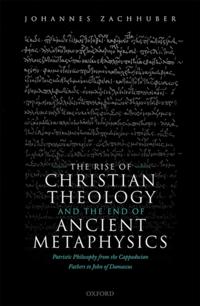
Rise of Christian Theology and the End of Ancient Metaphysics

Läs i Adobe DRM-kompatibel e-boksläsareDen här e-boken är kopieringsskyddad med Adobe DRM vilket påverkar var du kan läsa den. Läs mer
It has rarely been recognized that the Christian writers of the first millennium pursued an ambitious and exciting philosophical project alongside their engagement in the doctrinal controversies of their age. The Rise of Christian Theology and the End of Ancient Metaphysics offers, for the first time, a full analysis of this Patristic philosophy. It shows how it took its distinctive shape in the late fourth century and gives an account of its subsequent development until the time of John of Damascus. The book falls into three main parts. The first starts with an analysis of the philosophical project underlying the teaching of the Cappadocian fathers, Basil of Caesarea, Gregory of Nyssa and Gregory of Nazianzus. This philosophy, arguably the first distinctively Christian theory of being, soon became near-universally shared in Eastern Christianity. Just a few decades after the Cappadocians, all sides in the early Christological controversy took its fundamental tenets for granted. Its application to the Christological problem thus appeared inevitable. Yet it created substantial conceptual problems. Parts two and three describe in detail how these problems led to a series of increasingly radical modifications of the Cappadocian philosophy. In part two, Zachhuber explores the miaphysite opponents of the Council of Chalcedon, while in part three he discusses the defenders of the Council from the early sixth to the eighth century. Through this overview, the book reveals this period as one of remarkable philosophical creativity, fecundity, and innovation.
- Undertitel
- Patristic Philosophy from the Cappadocian Fathers to John of Damascus
- Författare
- Johannes Zachhuber
- ISBN
- 9780192603845
- Språk
- Engelska
- Utgivningsdatum
- 2020-05-28
- Förlag
- OUP Oxford
- Tillgängliga elektroniska format
- PDF - Adobe DRM
- Läs e-boken här
- E-boksläsare i mobil/surfplatta
- Läsplatta
- Dator