Spara
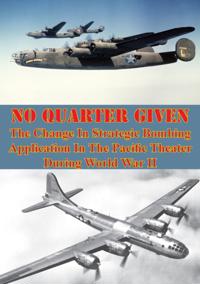
No Quarter Given: The Change In Strategic Bombing Application In The Pacific Theater During World War II

Läs i Adobe DRM-kompatibel e-boksläsareDen här e-boken är kopieringsskyddad med Adobe DRM vilket påverkar var du kan läsa den. Läs mer
European airpower theorists of the 1920's and 30's envisioned the deliberate bombing of civilians in order to affect an enemy nation's wartime production capabilities and national morale. However, American proponents of airpower were more exacting in their approach to the use of the airplane. The US Army Air Corps developed the idea of precision bombing as a means to destroy an enemy's ability to prosecute war through the targeting of only an enemy's means of production and state infrastructure while avoiding civilian casualties. World War II provided the US Army Air Force (USAAF) the opportunity to prove the effectiveness of this theory. However, as the war progressed, the USAAF targeted not just centers of production, but political targets as well as civilian populations. Thus, USAAF bombing came to resemble the type of application that was initially proffered by European theorists. Large-scale bombing of cities and populations became the mode of operation for the USAAF in the Pacific. Despite its policies and doctrine, the USAAF deliberately bombed civilian populations in conjunction with the Japanese means of production. Why did this targeting change take place? How did the USAAF eventually come to conduct indiscriminate area bombing of civilians despite the perception that it was contrary to our national mores?
- Författare
- Major John M. Curatola
- ISBN
- 9781782897149
- Språk
- Engelska
- Utgivningsdatum
- 2014-08-15
- Tillgängliga elektroniska format
- Epub - Adobe DRM
- Läs e-boken här
- E-boksläsare i mobil/surfplatta
- Läsplatta
- Dator