Spara
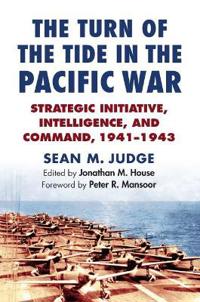
The Turn of the Tide in the Pacific War

Midway through 1942, Japanese and Allied forces found themselves fighting on two fronts—in New Guinea and the Solomon Islands. These concurrent campaigns, conducted between July 1942 and February 1943, proved a critical turning point in the war being waged in the Pacific, as the advantage definitively shifted from the Japanese to the Americans. Key to this shift was the Allies seizing of the strategic initiative—a concept that Sean Judge examines in this book, particularly in the context of the Pacific War.
The concept of strategic initiative, in this analysis, helps to explain why and how contending powers design campaigns and use military forces to alter the trajectory of war. Judge identifies five factors that come into play in capturing and maintaining the initiative: resources, intelligence, strategic acumen, combat effectiveness, and chance, all of which are affected by political will. His book uses the dual campaigns in New Guinea and the Solomon Islands as a case study in strategic initiative by reconstructing the organizations, decisions, and events that influenced the shift of initiative from one adversary to the other. Perhaps the most critical factor in this case is strategic acumen, without which the other advantages are easily squandered. Specifically, Judge details how General Douglas MacArthur and Admiral Chester Nimitz, in designing and executing these campaigns, provided the strategic leadership essential to reversing the tide of war—whose outcome, Judge contends, was not as inevitable as conventional wisdom tells us.
The strategic initiative, once passed to American and Allied forces in the Pacific, would never be relinquished. In its explanation of how and why this happened, The Turn of the Tide in the Pacific War holds important lessons for students of military history and for future strategic leaders.
The concept of strategic initiative, in this analysis, helps to explain why and how contending powers design campaigns and use military forces to alter the trajectory of war. Judge identifies five factors that come into play in capturing and maintaining the initiative: resources, intelligence, strategic acumen, combat effectiveness, and chance, all of which are affected by political will. His book uses the dual campaigns in New Guinea and the Solomon Islands as a case study in strategic initiative by reconstructing the organizations, decisions, and events that influenced the shift of initiative from one adversary to the other. Perhaps the most critical factor in this case is strategic acumen, without which the other advantages are easily squandered. Specifically, Judge details how General Douglas MacArthur and Admiral Chester Nimitz, in designing and executing these campaigns, provided the strategic leadership essential to reversing the tide of war—whose outcome, Judge contends, was not as inevitable as conventional wisdom tells us.
The strategic initiative, once passed to American and Allied forces in the Pacific, would never be relinquished. In its explanation of how and why this happened, The Turn of the Tide in the Pacific War holds important lessons for students of military history and for future strategic leaders.
- Undertitel
- Strategic Initiative, Intelligence, and Command, 1941-1943
- Författare
- Sean M. Judge
- Redaktör
- Jonathan M. House
- ISBN
- 9780700625987
- Språk
- Engelska
- Vikt
- 613 gram
- Utgivningsdatum
- 2018-03-15
- Sidor
- 296







