Spara
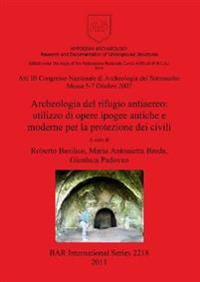
Atti III Congresso Nazionale di Archeologia del Sottosuolo: Massa 5-7 Ottobre 2007. Archeologia del rifugio antiaereo: utilizzo di opere ipogee antich
häftad, 2011
Italienska

The study and registration of artificial cavities means the documentation of underground structures. Just as Man started creating buildings on the surface of the Earth, over the course of time, he also perforated the surface thus creating new spaces and handing down structures which are essentially intact, which can be studied, restored and even utilised. In fact there exists an underground heritage, consisting of structures both built and buried underground over the passing of time. The interpretation and understanding of such structures is a source of interesting information on our past, in favour of the present. This series was created under the aegis of the Federazione Nazionale Cavita Artificiali (F.N.C.A.). The aim is to create a base for the disclosure of relevant, scientific research studies, whether monographs, the works of various authors or documentation from conferences and conventions and a series of easily consultable tools for the development of artificial cavity research. Contents: 1) I rifugi antiaerei di Ancona nelle due guerre mondiali (Alberto Recanatini); 2) Le provvidenziali risorse della metropoli dalle cinquemila grotte... (Fulvio Salvi) 3) Ricoveri antiaerei del cantiere navale del Muggiano (La Spezia): ricerca archivistica e indagine strutturale (Susanna Ognibene) 4) I confluiti Garza - Bova - Celato sottostanti il Palazzo della Loggia a Brescia: il riutilizzo come rifugio (Andrea Busi); 5) Catalogazione archeologica di una realta sommersa: i rifugi antiaerei di Milano nelle strutture antiche e moderne (Maria Antonietta Breda, Claudia Ninni, Gianluca Padovan); 6) Politecnico di Milano: archeologia industriale e fonti per lo studio delledilizia nel settore della protezione anti aerea (Maria Antonietta Breda); 7) La protezione antiaerea passiva e i tecnici della provincia: le cantine di Saronno e ling. Ugo Brebbia (Alessandro Merlotti); 8) Il riutilizzo degli ipogei presso Orte e San Lorenzo Vecchio nel Viterbese (Roberto Basilico, Gianluca Padovan, Alessandro Verdiani); 9) I rifugi antiaerei ad uso pubblico di Massa (Gianluca Padovan).
- Undertitel
- Atti III Congresso Nazionale di Archeologia del Sottosuolo: Massa 5-7 Ottobre 2007.
- ISBN
- 9781407307763
- Språk
- Italienska
- Vikt
- 1272 gram
- Utgivningsdatum
- 2011-05-15
- Förlag
- BAR Publishing
- Sidor
- 319







