Spara
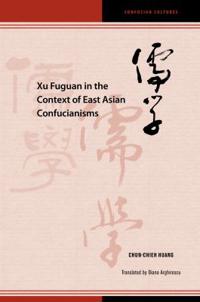
Xu Fuguan in the Context of East Asian Confucianisms
Among twentieth-century Confucians, Xu Fuguan (1904–1982) remains preeminent. This volume, written by Chun-chieh Huang, an authority on Xu’s life and thought, offers English-speaking readers for the first time an exhaustive analysis of the philosopher’s original ideas and research. A distinguished member of the group of Contemporary New Confucians, Xu made a significant contribution to the revival of Chinese culture and society, and the present book outlines the specific features of his legacy in comparison with the views of some of his influential Chinese and Japanese contemporaries.
The topics covered illustrate an overarching idea, namely, the innovative way in which Xu Fuguan answers a major question concerning Chinese culture, one posed by Chinese intellectuals since the May Fourth Movement: how best to approach the modernization of China. Xu’s work is based on the assumption that Confucian thought and ethics—the core of Chinese tradition—can be modernized because “there is nothing in it which is not compatible with the idea of human dignity or rights in modern society.” Xu addresses the question of China’s modernization by offering arguments in favor of building a connection between Confucianism and democracy, mainly its political dimension.
Huang places his subject in the vast context of twentieth-century Chinese Confucian studies and the history of East Asian thought. He compares Xu Fuguan with his most influential opponents Hu Shi (1891–1962) and Fu Sinian (1896–1950) as well as fellow Confucians Tang Junyi (1909–1978) and Mou Zongsan (1909–1995). Huang draws further comparisons between Xu’s thought and that of Japanese Enlightenment philosopher Fukuzawa Yukichi (1835–1901) and the father of contemporary Japanese capitalism, Shibusawa Eiichi (1840–1931). These contrasts highlight the “Chineseness” of Xu’s theories and the marks left by traditional Chinese thought and culture on his writing and life in the countryside, where he spent much of his youth.
The topics covered illustrate an overarching idea, namely, the innovative way in which Xu Fuguan answers a major question concerning Chinese culture, one posed by Chinese intellectuals since the May Fourth Movement: how best to approach the modernization of China. Xu’s work is based on the assumption that Confucian thought and ethics—the core of Chinese tradition—can be modernized because “there is nothing in it which is not compatible with the idea of human dignity or rights in modern society.” Xu addresses the question of China’s modernization by offering arguments in favor of building a connection between Confucianism and democracy, mainly its political dimension.
Huang places his subject in the vast context of twentieth-century Chinese Confucian studies and the history of East Asian thought. He compares Xu Fuguan with his most influential opponents Hu Shi (1891–1962) and Fu Sinian (1896–1950) as well as fellow Confucians Tang Junyi (1909–1978) and Mou Zongsan (1909–1995). Huang draws further comparisons between Xu’s thought and that of Japanese Enlightenment philosopher Fukuzawa Yukichi (1835–1901) and the father of contemporary Japanese capitalism, Shibusawa Eiichi (1840–1931). These contrasts highlight the “Chineseness” of Xu’s theories and the marks left by traditional Chinese thought and culture on his writing and life in the countryside, where he spent much of his youth.
- Författare
- Chun-chieh Huang
- Översättare
- Diana Arghirescu
- ISBN
- 9780824880385
- Språk
- Engelska
- Vikt
- 551 gram
- Serie
- Confucian Cultures
- Utgivningsdatum
- 2019-11-30
- Sidor
- 276