Spara
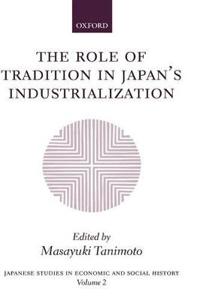
The Role of Tradition in Japan's Industrialization
This volume explores Japan's industrialization from the perspective of "indigenous development", focusing on what may be identified as "traditional" or "indigenous" factors. Japanese industrialization has often been described as the process of transferring or importing technology and organization from Western countries. Recent research has, however, shown that economic development had already begun in pre-modern period (Tokugawa-era) in Japan. This economic development not only prepared Japan for the transfer from the West, but also formed the basis of the particular industrialization process which paralleled transplanted industrialization in modern Japan. The aim of the volume is to demonstrate this aspect of industrialization through the detailed studies of so-called "indigenous" industries. This collection of papers looks at the industries originating in the Tokugawa-era, such as weaving, silk-reeling and pottery, as well as the newly developed small workshops engaged in manufacturing machinery, soap, brash, buttons, etc. Small businesses in the tertiary sector, transportation and commerce, are also observed. Available for the first time in English, these papers shed new light on the role of "indigenous development" and our understanding of the dualistic character of Japan's economic development.
- Undertitel
- Another Path to Industrialization
- Redaktör
- Masayuki Tanimoto
- ISBN
- 9780198292746
- Språk
- Engelska
- Vikt
- 703 gram
- Utgivningsdatum
- 2006-05-25
- Förlag
- Oxford University Press
- Sidor
- 368