Spara
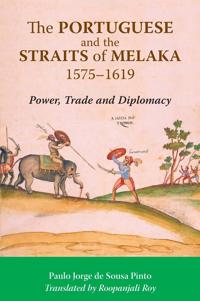
The Portuguese and the Straits of Melaka, 1575-1619
Following the fall of the Melaka Sultanate to the Portuguese in 1511, the sultanates of Johor and Aceh emerged as major trading centres alongside Portuguese Melaka. Each power represented wider global interests. Aceh had links with Gujerat, the Ottoman Empire and the Levant. Johor was a centre for Javanese merchants and others involved with the Eastern spice trade. Melaka was part of the Estado da India, Portugal's trading empire that extended from Japan to Mozambique. Throughout the sixteenth century, a peculiar balance among the three powers became an important character of the political and economical life in the Straits of Melaka. The arrival of the Dutch in the early seventeenth century upset the balance and led to the decline of Portuguese Melaka.
Making extensive use of contemporary Portuguese sources, Paulo Pinto uses geopolitical approach to analyse the financial, political, economic and military institutions that underlay this triangular arrangement, a system that persisted because no one power could achieve an undisputed hegemony. He also considers the position of post-conquest Melaka in the Malay World, where it remained a symbolic centre of Malay civilisation and a model of Malay political authority despite changes associated with Portuguese rule. In the process provides information on the social, political and genealogical circumstances of the Johor and Aceh sultanates.
|Following the fall of the Melaka Sultanate to the Portuguese in 1511, the sultanates of Johor and Aceh emerged as major trading centres alongside Portuguese Melaka. Each power represented wider global interests. Aceh had links with Gujerat, the Ottoman Empire and the Levant. Johor was a centre for Javanese merchants and others involved with the Eastern spice trade. Melaka was part of the Estado da India, Portugal's trading empire that extended from Japan to Mozambique. Throughout the sixteenth century, a peculiar balance among the three powers became an important character of the political and economical life in the Straits of Melaka. The arrival of the Dutch in the early seventeenth century upset the balance and led to the decline of Portuguese Melaka.
Making extensive use of contemporary Portuguese sources, Paulo Pinto uses geopolitical approach to analyse the financial, political, economic and military institutions that underlay this triangular arrangement, a system that persisted because no one power could achieve an undisputed hegemony. He also considers the position of post-conquest Melaka in the Malay World, where it remained a symbolic centre of Malay civilisation and a model of Malay political authority despite changes associated with Portuguese rule. In the process provides information on the social, political and genealogical circumstances of the Johor and Aceh sultanates.
- Undertitel
- Power, Trade and Diplomacy
- Författare
- Paulo Jorge de Sousa Pinto
- Översättare
- Roopanjali Roy
- ISBN
- 9789971695705
- Språk
- Engelska
- Vikt
- 612 gram
- Utgivningsdatum
- 2012-03-30
- Förlag
- NUS Press
- Sidor
- 416