Spara
How People Change
e-bok, 2013
Engelska
Läs i Adobe DRM-kompatibel e-boksläsareDen här e-boken är kopieringsskyddad med Adobe DRM vilket påverkar var du kan läsa den. Läs mer
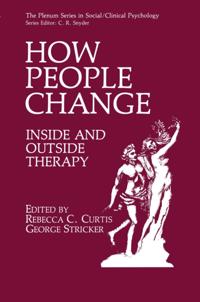
In the myth of Daphne and Apollo, Cupid fired two arrows: one causing flight from love, the other passionate attraction. Cupid aimed his first arrow at Daphne, a beautiful nymph who loved her freedom; the next struck Apollo, who lusted after Daphne. Daphne, frightened and intent upon virginity, fled Apollo but was unable to run fast enough. When her strength was almost gone, she sought protection in the familiar waters of her father's river. He answered her prayers: Her hair became leaves, and her feet, roots growing into the ground; she was transformed into a laurel tree. Apollo, kissing the sprouting bark, pledged to honor Daphne by placing a laurel wreath on the head of every hero who won a victory. Unable to evade the consequences of the arrow that wounded her, Daphne called upon the river, the creative power of both nature and time-a symbol of fertility, but also of oblivion-to help her survive when her strength was gone. Daphne's inner triumph in the face of injury is an appropriate sym- bol for the types of transformation witnessed by psychologists. In his book on symbols, Circlot (1962, p. 173) writes that the crowning of the poet, artist, or conqueror with laurel leaves "e;presupposes a series of inner victories over the negative and dissipative influence of the basest forces. "e; Further, the tree "e;denotes the life of the cosmos: its consistence, growth, proliferation, generative, and regenerative processes"e; (Circlot, 1962, p. 328).
- Undertitel
- Inside and Outside Therapy
- Redaktör
- George Stricker, Rebecca C. Curtis
- ISBN
- 9781489907417
- Språk
- Engelska
- Utgivningsdatum
- 2013-06-29
- Förlag
- SPRINGER US
- Tillgängliga elektroniska format
- PDF - Adobe DRM
- Läs e-boken här
- E-boksläsare i mobil/surfplatta
- Läsplatta
- Dator