Spara
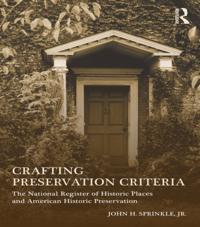
Crafting Preservation Criteria
Läs i Adobe DRM-kompatibel e-boksläsareDen här e-boken är kopieringsskyddad med Adobe DRM vilket påverkar var du kan läsa den. Läs mer
In 1966, American historic preservation was transformed by the passage of the National Historic Preservation Act, which created a National Register of Historic Places. Now comprising more than 1.4 million historic properties across the country, the National Register is the official federal list of places in the United States thought to be worthy of preservation. One of the fundamental principles of the National Register is that every property is evaluated according to a standard set of criteria that provide the framework for understanding why a property is significant in American history. The origins of these criteria are important because they provide the threshold for consideration by a broad range of federal preservation programs, from planning for continued adaptive use, to eligibility for grants, and inclusion in heritage tourism and educational programs. Crafting Preservation Criteria sets out these preservation criteria for students, explaining how they got added to the equation, and elucidating the test cases that allowed for their use. From artworks to churches, from 'the fifty year rule' to 'the historic scene', students will learn how places have been historically evaluated to be placed on the National Register, and how the criteria evolved over time.
- Undertitel
- The National Register of Historic Places and American Historic Preservation
- Författare
- Jr. John H. Sprinkle
- ISBN
- 9781136169847
- Språk
- Engelska
- Utgivningsdatum
- 5.3.2014
- Förlag
- TAYLOR FRANCIS
- Tillgängliga elektroniska format
- PDF - Adobe DRM
- Läs e-boken här
- E-boksläsare i mobil/surfplatta
- Läsplatta
- Dator