Spara
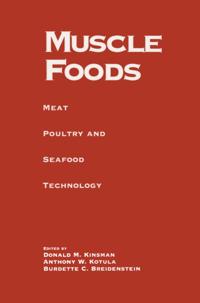
Muscle Foods

Läs i Adobe DRM-kompatibel e-boksläsareDen här e-boken är kopieringsskyddad med Adobe DRM vilket påverkar var du kan läsa den. Läs mer
Traditionally, in the food industry, there has been a distinction made among meat, poultry, seafood, and game. Meat has historically been defined as the edible flesh of animals. This basically referred only to the red meats, namely, beef, lamb, pork, and veal, including both fresh and processed products as well as variety or glandular meats. It has been recognized more recently that all foods derived from muscle, or muscle foods, have basically the same or similar characteristics in physical and chemical properties. Tberefore, it is logical to exarnine and consider all muscle foods under one cover. Tbis book, therefore, is an attempt to address the various attributes of red meat, poultry, fish, and game under the single heading of muscle foods and to note any differences where they might OCCUT. It is of interest that of the 10 top V. S. meat companies in 1990, 8 of them were dealing with poultry as well as red meats and that 4 of the 10 were also involved with seafoods. Tbis lends impetus to the inclusion of all three in a book such as this. Furthermore, the rapid increase in consumption of poultry meat to approximately 30 kg (65 pounds) per capita and seafoods to 7 kg (16 pounds) per capita compared to beef at 34 kg (75 pounds) and pork at 30 kg (65 pounds), whereas veal and lamb/mutton represent only 0.
- Undertitel
- Meat Poultry and Seafood Technology
- ISBN
- 9781475759334
- Språk
- Engelska
- Utgivningsdatum
- 2013-03-09
- Förlag
- SPRINGER US
- Tillgängliga elektroniska format
- PDF - Adobe DRM
- Läs e-boken här
- E-boksläsare i mobil/surfplatta
- Läsplatta
- Dator







