Spar
Violence and Justice in Bologna
e-bok, 2018
Engelsk
Les i Adobe DRM-kompatibelt e-bokleserDenne e-boka er kopibeskyttet med Adobe DRM som påvirker hvor du kan lese den. Les mer
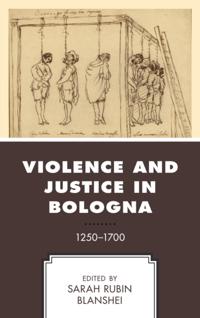
This collection of essays offers a unique contribution to the study of violence and justice in a late medieval and early modern Italy by combining a multivocal perspective with a case-study focus on the city-state of Bologna. Drawing on the city's singularly rich archival resources, the authors explore various facets of violence-ranging from the interpersonal to the less frequently studied typologies of blasphemy, rape, political rebellion, and student brawls-and set the institutions of the police and law courts into their socio-political and cultural contexts. They also apply a broad variety of quantitative and qualitative approaches-processual, microhistorical, legalism, comparative and criminological-to their assessments of the procedures and practices of criminal justice and the experiences of violent behavior, providing both short-term, in-depth analyses of specific events and over-arching reviews of long-term trends.Bologna itself, with its renowned university, economic innovations, strategic importance as a commercial and cultural crossroads, its political volatility and experiments with diverse constitutional structures, provides a rewarding laboratory for analyzing changes and continuities in late medieval and early modern violence and justice. From these studies emerges a narrative that challenges the traditional portrayal of those periods as eras when brutality and rage were "e;normal"e; in social relations and criminal justice was characterized mainly by punitive strategies of torture and repression.
- Undertittel
- 1250-1700
- Redaktør
- Sarah Rubin Blanshei
- ISBN
- 9781498546348
- Språk
- Engelsk
- Utgivelsesdato
- 2.4.2018
- Tilgjengelige elektroniske format
- Epub - Adobe DRM
- Les e-boka her
- E-bokleser i mobil/nettbrett
- Lesebrett
- Datamaskin






