Tallenna
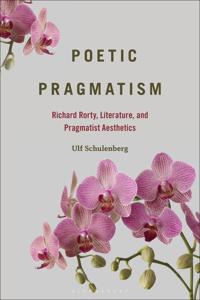
Poetic Pragmatism
The first detailed discussion of Richard Rorty’s understanding of literature and aesthetics, which engages with a broad range of writers, including Emerson, Nietzsche, and Proust.
For most of his career, at least since the publication of Philosophy and the Mirror of Nature in 1979, Richard Rorty called his readers’ attention to the importance of the poets’ work. Indeed, Ulf Schulenberg argues that Rorty’s version of pragmatism should be regarded as a poetic pragmatism, since it elucidates the significance of poetic agency, human creativity, and idiosyncratic acts of poiesis for the development of mankind, constantly stressing – in a clearly Romantic gesture – the power of the imagination.
Poetic Pragmatism explains why one should speak of Rorty’s poetic pragmatism and what makes it poetic. In readings of writers such as Whitman, Nietzsche, Nabokov, and Kundera through and alongside Rorty, Schulenberg also offers the first detailed discussion of Rorty’s understanding of literature and aesthetics and illuminates the role of Rorty’s anti-authoritarianism, focusing in particular on the anti-authoritarian potential of aesthetic form.
Poetic Pragmatism suggests that in a Rortyan poeticized culture the development from religion (God) to philosophy (Truth) to literature (imagination, novelty, plurality, redescription) is an anti-authoritarian and humanist story of increasing self-reliance and self-creation, a development from finding to making that is central to Rorty’s pragmatism.
- Alaotsikko
- Richard Rorty, Literature, and Pragmatist Aesthetics
- Kirjailija
- Ulf Schulenberg
- ISBN
- 9798216443704
- Kieli
- englanti
- Paino
- 446 grammaa
- Julkaisupäivä
- 12.11.2026
- Kustantaja
- BLOOMSBURY PUBLISHING PLC
- Sivumäärä
- 288







